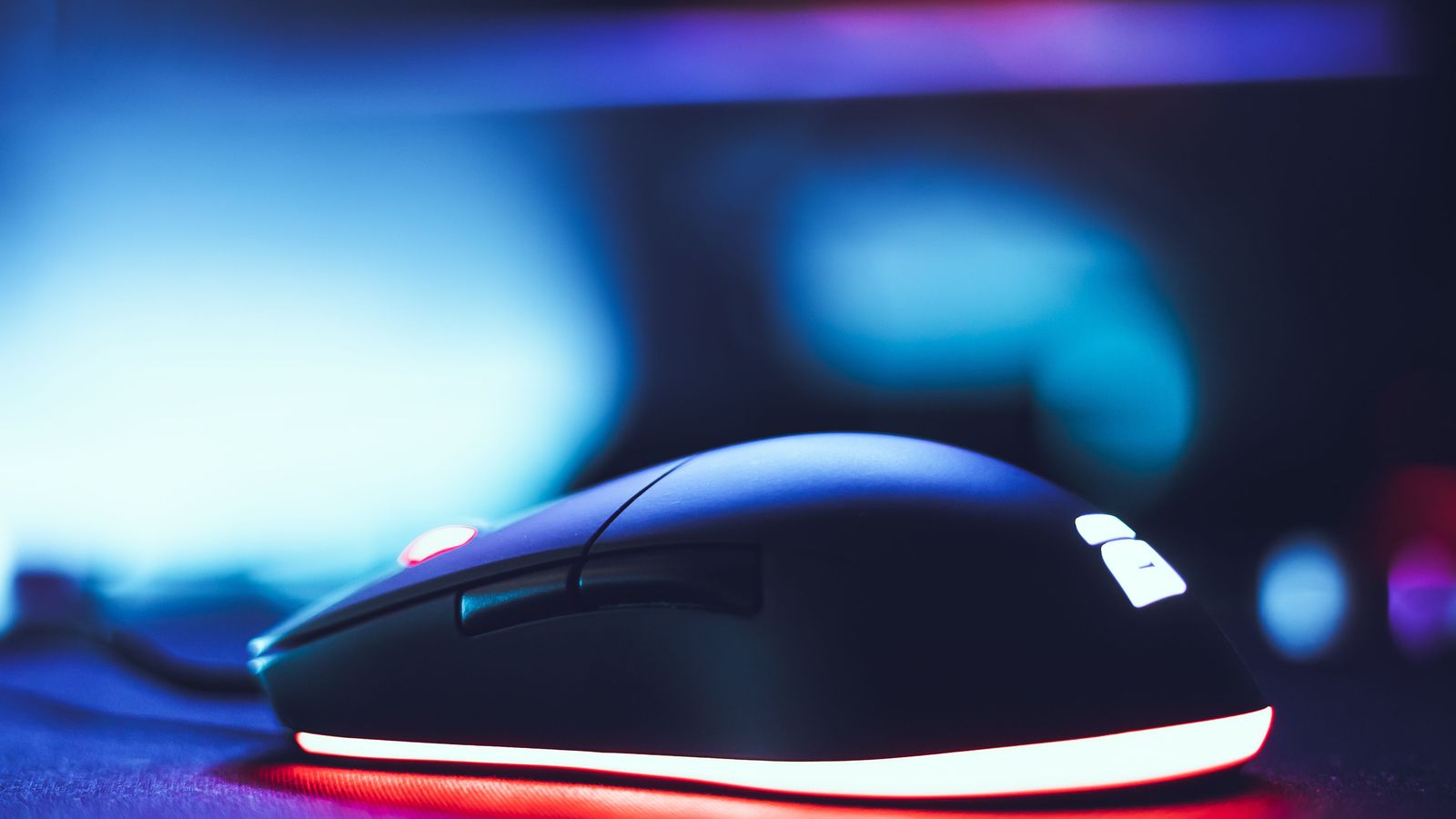
The Logitech G Pro X Superlight and the Razer DeathAdder are the two mouse families that defined competitive gaming mice. The Superlight became the pro standard in esports after its 2023 launch, while the DeathAdder has been the best-selling ergonomic gaming mouse for years. Now both lines have a right-handed ergonomic flagship: Logitech's DEX variant of the Superlight 2 and Razer's DeathAdder V4 Pro.
This comparison is built from published specifications, spec sheets, and independent review findings. No paid placements, no sponsored rankings. If you read our best gaming mice of 2026 guide, consider this the deep dive on the two flagships it rated highest.
Shape and size: closer than ever
Both mice are right-handed ergonomic, which is the big change. The original Superlight was symmetrical and ambidextrous; the DEX is Logitech's answer to players who wanted the Superlight formula in an ergonomic shell. The DeathAdder shape has been refined over four Pro generations.
On the numbers they are near twins. The Razer DeathAdder V4 Pro is 128 x 68 x 44 mm at 56 grams (57 in white). The Logitech G Pro X Superlight 2 DEX is 125.8 x 67.7 x 43.9 mm at 60 grams. Reviewers describe the DeathAdder as the comfortable default for palm and relaxed claw grips, while the DEX suits palm, claw, and relaxed fingertip. Players with smaller hands should check the published dimensions against their hand length before buying.
Weight and sensor: Razer by four grams, a draw on tracking
At 56 grams, the DeathAdder V4 Pro is one of the lightest ergonomic mice available. The DEX at 60 grams is hardly heavy by 2026 standards (under 70 grams counts as light), but it is the heavier mouse here. In blind feel, four grams is barely noticeable; on paper, Razer wins.
The sensor comparison is a draw in practice. The DeathAdder uses Razer's Focus Pro 45K Gen-2 (45,000 DPI, 900 IPS, 85 G); the DEX uses Logitech's HERO 2 (44,000 DPI, 888 IPS, 88 G, with zero smoothing per Logitech's spec sheet). Every modern flagship sensor tracks flawlessly on normal pads, and reviewers of both mice report precise, consistent tracking. Buy for shape and features, not the sensor ceiling.
Polling, switches, and battery
Both mice reach 8,000 Hz polling over wireless: the DeathAdder via its included HyperSpeed Gen-2 dongle, the DEX via LIGHTSPEED. The difference is wired mode. The DeathAdder V4 Pro polls at 8,000 Hz wired too, while the DEX caps at 1,000 Hz when plugged in. That only matters if you play wired competitively, and even then the difference sits at the edge of human perception.
The DeathAdder goes all optical: Gen-4 optical mouse switches rated for 100 million clicks, plus an optical scroll wheel Razer says triples wheel durability versus mechanical designs. Optical switches avoid the double-click degradation that eventually wears out mechanical switches. The DEX uses LIGHTFORCE hybrid switches, combining optical sensing with a familiar mechanical click feel. Both are excellent; Razer's full-optical stack is the more durability-focused design.
Battery is Razer's clearest win. The DeathAdder V4 Pro is rated for up to 150 hours at 1,000 Hz polling; the DEX for 95 hours of constant motion. Both recharge over USB-C, and 95 hours covers weeks of play. The DEX's counter is POWERPLAY compatibility: pair it with Logitech's wireless charging mat and it never needs a cable at all.
Software and extras
The DeathAdder offers six programmable buttons; the DEX has five. Both ship with grip tape in the box. The DEX adds onboard memory for one profile, so settings travel without software running. Both need their software (Synapse or G HUB) for full customization.
Price at time of writing
The DeathAdder V4 Pro launched at $169.99, while the Pro X Superlight 2 DEX carries a $159.99 MSRP at time of writing. Both see regular discounts, so check current pricing before buying: the real-world gap often swings either way during sales.
The quick comparison
| Spec | Razer DeathAdder V4 Pro | Logitech G Pro X Superlight 2 DEX |
|---|---|---|
| Weight | 56g | 60g |
| Shape | Right-handed ergonomic | Right-handed ergonomic |
| Sensor | Focus Pro 45K Gen-2 (45,000 DPI, 900 IPS) | HERO 2 (44,000 DPI, 888 IPS) |
| Polling | Up to 8K wired + wireless | Up to 8K wireless, 1K wired |
| Switches | Gen-4 optical, 100M clicks | LIGHTFORCE hybrid |
| Buttons | 6 programmable | 5 programmable |
| Battery | Up to 150h at 1000Hz | 95h constant motion |
| Charging | USB-C | USB-C + POWERPLAY compatible |
| MSRP | $169.99 | $159.99 |
| Where to buy | Check current price | Check current price |
Verdict by user type
Best for competitive FPS players: Razer DeathAdder V4 Pro. Lighter, 8K polling in both wired and wireless modes, a longer-rated battery, and an extra programmable button. It wins the spec sheet outright.
Best for pro-proven shape and wireless charging setups: Logitech G Pro X Superlight 2 DEX. The shape that won over the esports scene, POWERPLAY wireless charging for a cable-free desk, and it usually lists about ten dollars less.
Best value between the two: Logitech G Pro X Superlight 2 DEX, at time of writing, with its $159.99 MSRP sitting slightly under Razer's. During sales the difference is often bigger, so compare both before checking out.
Either way, you are getting one of the two best gaming mice of 2026. Measure your hand against the published dimensions, pick the shape that fits, and spend your practice time on aim drills instead of spec sheets.
Some links on this page are affiliate links. If you buy through them, we may earn a commission at no extra cost to you.
Razer. If you sign up through this link we may earn a commission, at no extra cost to you.
Check current priceLogitech G. If you sign up through this link we may earn a commission, at no extra cost to you.
Check current price